
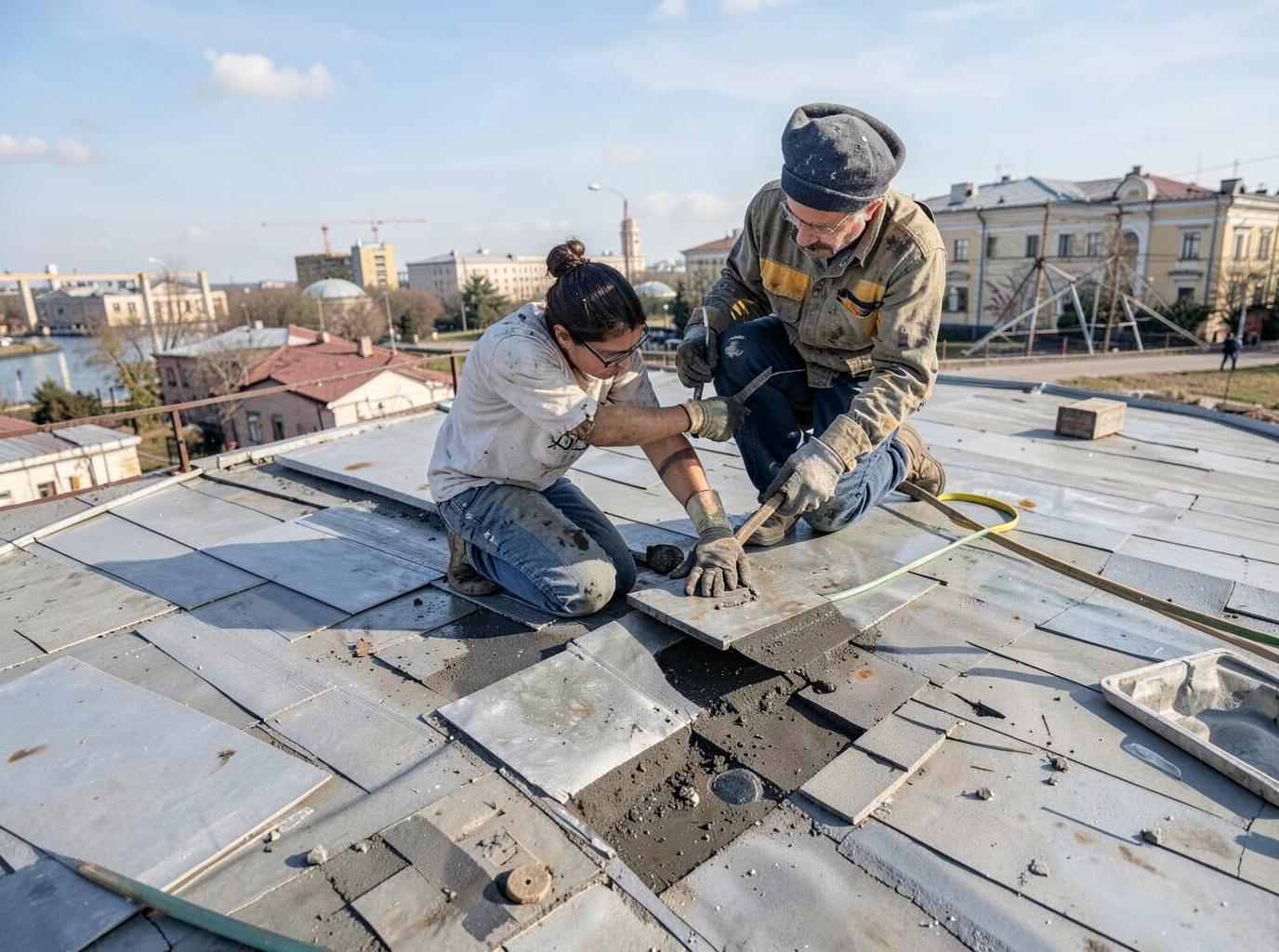
Odessa homes in neighborhoods like West Odessa and Parks often feature older asphalt or wood shake roofs that degrade quickly under intense summer heat and abrasive dust storms common in Ector County. Heat-resistant replacements typically involve reflective metal panels or cool-roof membranes that reduce attic temperatures by reflecting sunlight rather than absorbing it. These materials hold up better against the region's low humidity and occasional high winds that carry fine sand capable of wearing surface granules off standard shingles within a few seasons.
When replacing roofs near landmarks such as the Globe Theatre or Presidential Museum and Leadership Library, crews must account for tight access in older downtown blocks where tree cover is minimal and sun exposure is constant. Proper underlayment with enhanced UV stabilizers and sealed flashing around chimneys and vents prevents heat expansion cracks that appear after repeated 100-plus degree days. Homeowners in nearby Midland or Andrews often request the same upgrades because the same arid conditions extend across the Permian Basin.
Soil movement from occasional heavy rains after long dry spells can shift foundations slightly, stressing roof decking in Crane-area homes built on similar caliche ground. A thorough deck inspection during replacement catches rotted plywood early so new heat-reflective layers sit on solid substrate. Ventilation upgrades paired with the new roof help exhaust trapped heat before it reaches living spaces.
Technician insight
In Odessa the thing that catches most people out with Heat-Resistant Roof Replacement is underestimating how dust storms grind down standard shingles on the north and west exposures while the sun bakes the south side; older homes in West Odessa often need deck work because heat and minor soil shifts have already loosened fasteners.
West Odessa Ranch Home Roof Upgrade
Homeowner noticed attic temperatures spiking and granules collecting in gutters after several dust storms. Inspection showed cracked shingles and failed underlayment on the south slope. We removed the old layers, repaired soft spots in the deck, and installed a reflective metal system with upgraded ridge venting. The new roof now handles summer heat and wind-driven sand without the previous rapid wear.
Heat-Resistant Roof Replacement Services We Offer
✓Metal Panel Heat-Reflective Replacement
Installs standing-seam metal systems that shed heat and resist dust abrasion common in West Odessa and Parks neighborhoods.
✓Cool Roof Membrane Upgrade
Applies white or light-colored TPO or EPDM membranes designed to reflect sunlight during Odessa's prolonged arid summers.
✓Tile Roof Heat-Resistant Conversion
Replaces aging asphalt with clay or concrete tiles that provide thermal mass and better performance against Ector County dust storms.
✓Enhanced Ventilation and Insulation Pairing
Adds ridge vents and radiant barrier insulation during roof replacement to reduce attic heat buildup in Downtown Odessa homes.
✓Flashing and Sealant Heat Upgrade
Upgrades all perimeter and penetration flashing with high-temperature rated materials that withstand expansion from summer heat.
Heat-Resistant Roof Replacement Cost in Odessa, TX
| Service | Typical Range | What Affects It |
|---|---|---|
| Asphalt to Metal Panel Conversion | $8–$14 per sq ft | Higher end for complex pitches or added insulation in dust-prone West Odessa homes. |
| Cool Roof Membrane Installation | $6–$11 per sq ft | Varies with existing deck condition and access in older Downtown blocks. |
| Tile Roof Replacement | $9–$15 per sq ft | Includes underlayment suited to Ector County heat cycles. |
| Ventilation and Insulation Add-On | $1,200–$2,800 | Common upgrade when replacing roofs on 1970s–1990s homes. |
Ranges are typical for Odessa, TX and confirmed with an exact written quote before any work starts.
How it works
- 1
Site Assessment
Inspect existing roof, deck condition, and ventilation in the context of Odessa's heat and dust exposure.
- 2
Material Selection
Recommend reflective options suited to Ector County summers and wind-driven sand patterns.
- 3
Deck Preparation
Repair or replace damaged sheathing and add heat-resistant underlayment before new surface installation.
- 4
Installation and Sealing
Apply new heat-reflective roof with sealed edges and upgraded ventilation to manage attic temperatures.
- 5
Final Walkthrough
Review completed work with homeowner and explain maintenance steps for local weather conditions.
Pricing
Upfront written quotes based on roof size, pitch, and chosen heat-resistant material; ranges reflect typical Odessa jobs.